SISEM — Emergency Medical Dispatch Platform
Overview
SISEM (Sistema de Información de Emergencias Médicas) is the core operational platform for Bogotá's prehospital emergency medical services. The system manages the full chain of emergency care — from the moment a call arrives at the dispatch center to the closure of an incident — coordinating ambulance crews, medical regulation, nursing, mental health teams, and IPS hospital alerts across the city. As the UX/UI designer, I led an extensive research process that went far beyond standard user interviews: I spent time in the emergency call center observing how operators receive calls and register incidents in real time, mapped the complete prehospital care workflow with doctors, paramedic crews, nurses, and equipment providers, and translated that operational complexity into a three-column dispatch interface designed to reduce errors, accelerate incident creation, and give every role — from the call line operator (TARM) to the medical regulator — exactly the information they need, exactly when they need it.
Team
- UX/UI Lead: Jorge Molano
- UX/UI Designer: 3
- Developers: 4
- QA Tester: 2
- Project Manager: Emergency Operations Specialist
Time
1.5 Years
Designed For
SISEM serves five distinct roles operating simultaneously under high-pressure conditions. The Line Operator (TARM) receives emergency calls and creates incidents in real time while the caller is still on the line — speed and accuracy are non-negotiable. The Medical Regulator, a physician, makes the final call on resource allocation and patient routing. Dispatch manages ambulance assignment, tracking, and redistribution across the city. Nursing and Mental Health teams handle patient management and can escalate directly to the regulator or dispatch. Each role sees a tailored view of the same incident — with the right data surfaced, the right actions available, and the right alerts triggered — without interrupting the flow of the others. The design challenge was not just usability: it was understanding a life-critical operational system deeply enough to make it faster, clearer, and less prone to the errors that cost lives.
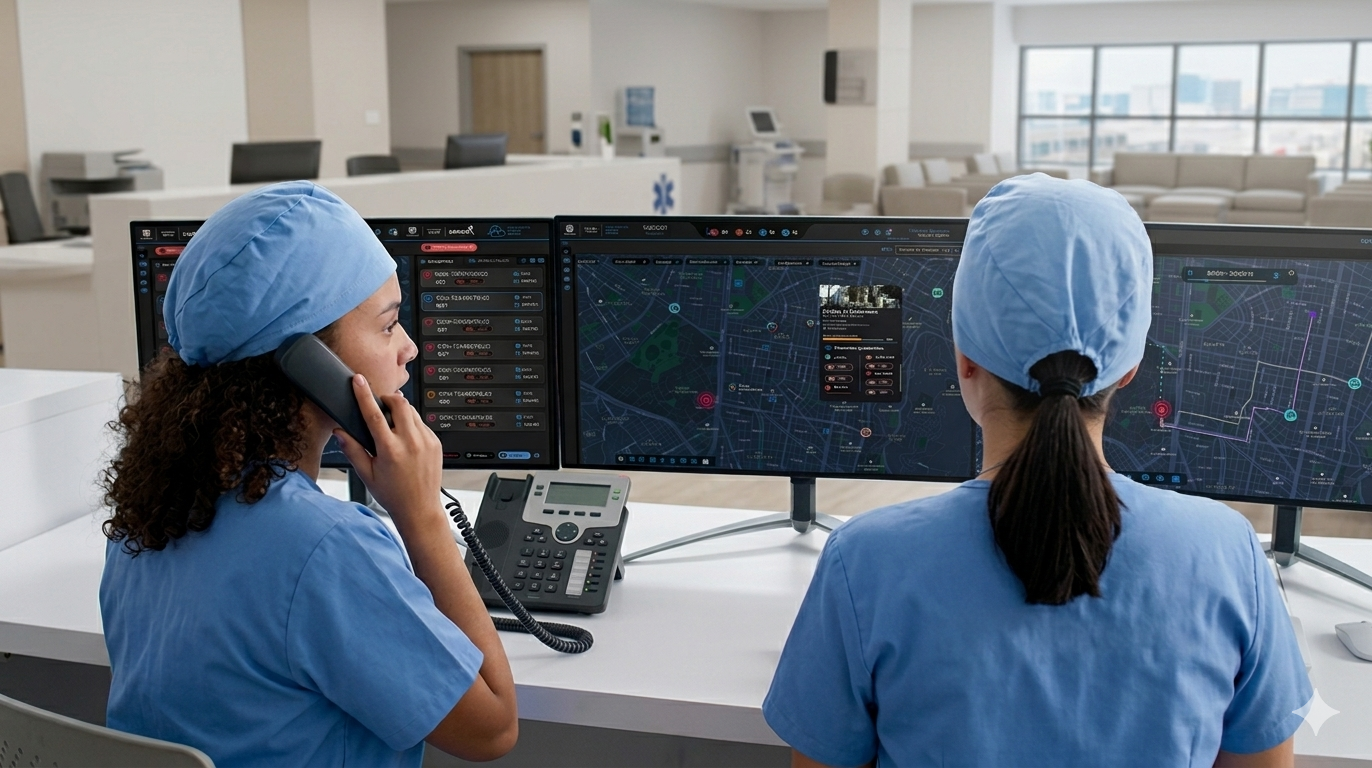

Crafting the Solution
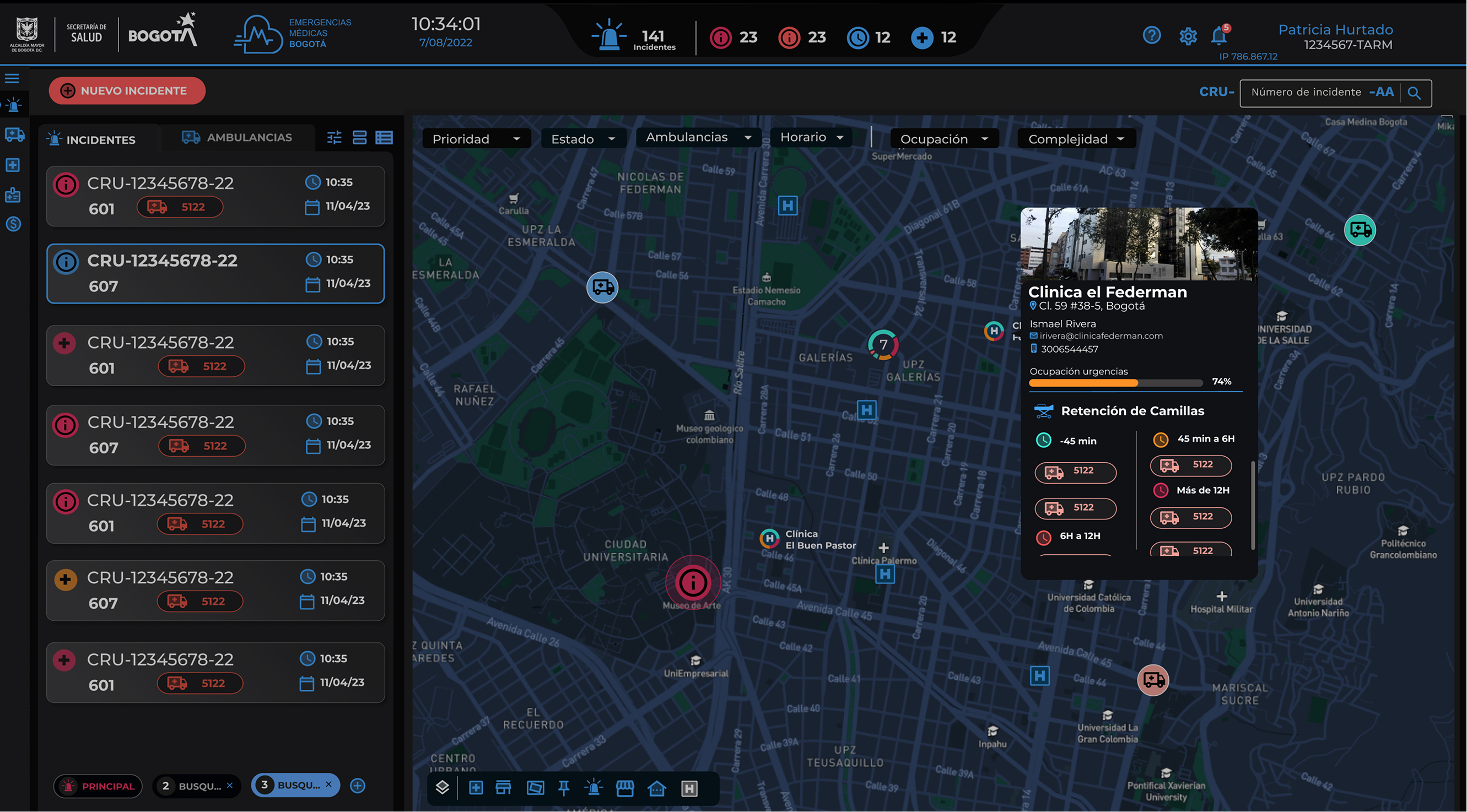
The design process started in the field. I observed emergency call operators receiving real calls — watching how they navigated between screens, where they lost time, where they made errors under pressure. I interviewed medical regulators about resource prioritization decisions, rode along with dispatch coordinators tracking ambulance availability across the city, and worked with nurses, mental health professionals, and equipment providers to map every handoff in the prehospital care chain. From that research, I designed a three-column interface built around the operational rhythm of a SISEM shift: the left panel holds the incident list and resource overview, filterable by status, incident type, zone, and time range, with a TOP 5 panel surfacing the five highest-priority and five oldest unattended incidents at all times. The center column is the active incident workspace — a tabbed system supporting up to 10 simultaneous active incidents, each with a stepper that tracks the incident through creation, confirmation, dispatch, and closure, plus quick-edit chips that let operators update critical fields without breaking their call flow. The right column shows the active assignment map for APH resource deployment. A persistent header carries operational indicators, user role controls, and system notifications. Every element of the interface was validated against the actual workflows of each role, iterated with the teams, and stress-tested against the time pressure of a real emergency call.


Results
The SISEM interface redesign transformed how Bogotá's emergency medical dispatch center operates. By mapping the complete prehospital care process through deep field research — from the first call to ambulance closure — the new three-column layout reduced the cognitive load on call operators during live calls, surfacing the right information at the right moment for each role without requiring them to switch between multiple screens. The stepper-based incident workflow (creation → confirmation → dispatch → closure) gave every team member a shared view of incident status, reducing miscommunication between the line, dispatch, and medical regulation. The TOP 5 priority panel ensured that the most critical and longest-pending incidents were never buried in the queue. Quick-edit chips and the tabbed active incident system allowed operators to manage up to 10 simultaneous incidents without losing context on any of them — a critical capability in high-demand emergency periods. The platform set a new standard for prehospital emergency dispatch UX in Colombian public health infrastructure.
Deliverables
