CPIT — Traffic Violation Processing Center
Overview
CPIT is the Secretaría de Movilidad de Bogotá's platform for processing traffic violations captured by license plate recognition cameras. My role was to lead the complete UX/UI redesign: conducting field research with enforcement agents, understanding how they make decisions under time pressure, and translating that into an interface that reduced time-per-evidence and the erroneous violations caused by poor evidence analysis. The core challenge was not technical: it was understanding a critical operational workflow well enough to simplify it without breaking it.
Team
- UX/UI Lead: Jorge Molano
- UX/UI Designer: 1
- Developers: 2
- QA Tester: 1
- Project Manager: Mobility Specialist
Time
1 Year
Designed For
CPIT serves enforcement agents working in Bogotá's violation processing centers, who evaluate dozens of evidence captures per shift under strict time pressure. The redesign also serves system administrators responsible for configuring vehicle restriction schedules (pico y placa), camera settings, and certifications. The outdated platform created friction at every step — unclear evidence layouts, scattered vehicle data, and slow workflows that directly reduced the number of violations agents could process per day. The new design centers the agent's decision-making: surfacing the right vehicle information at the right moment, reducing cognitive load, and making the difference between a valid violation and a dismissed one immediately visible.
Crafting the Solution
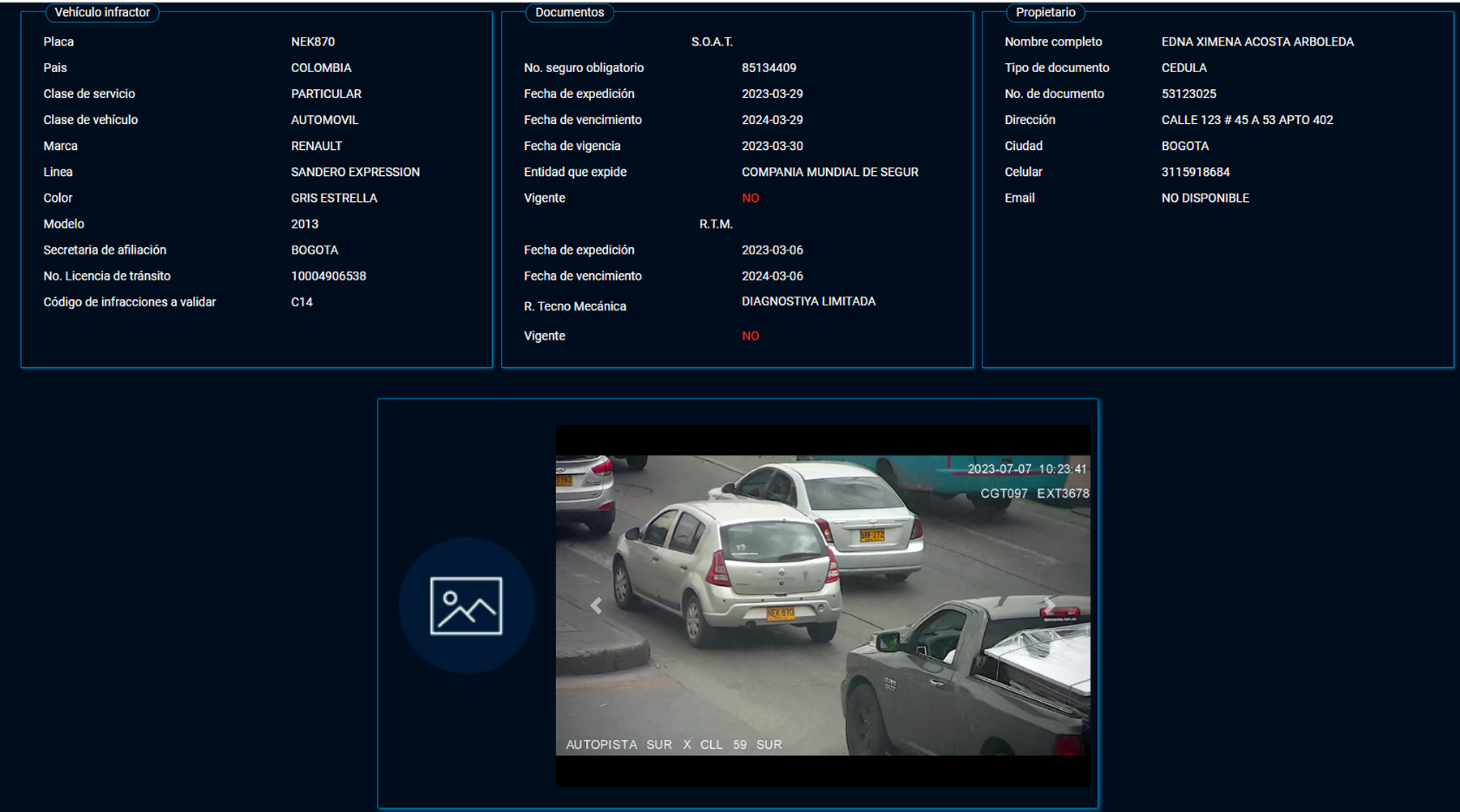
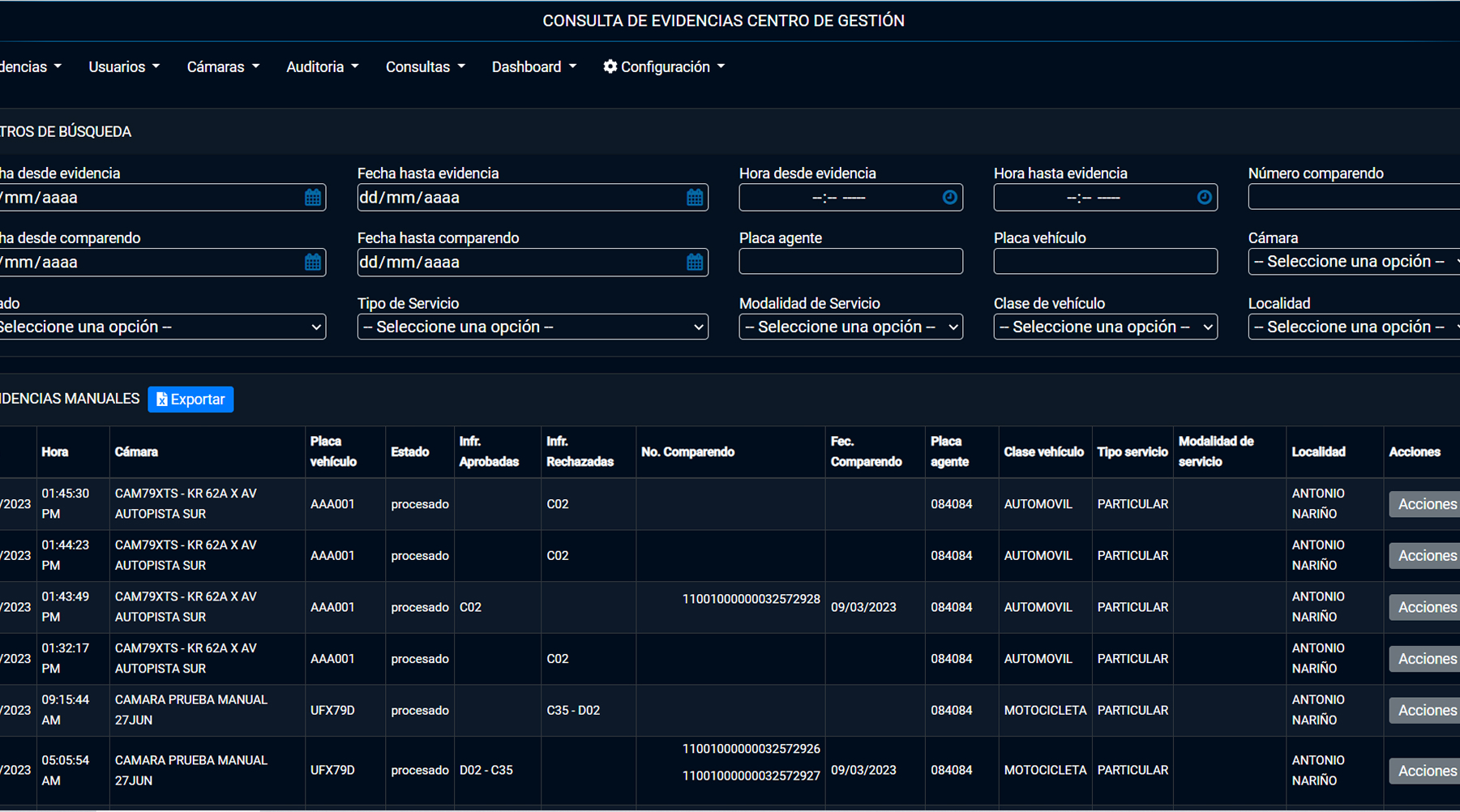
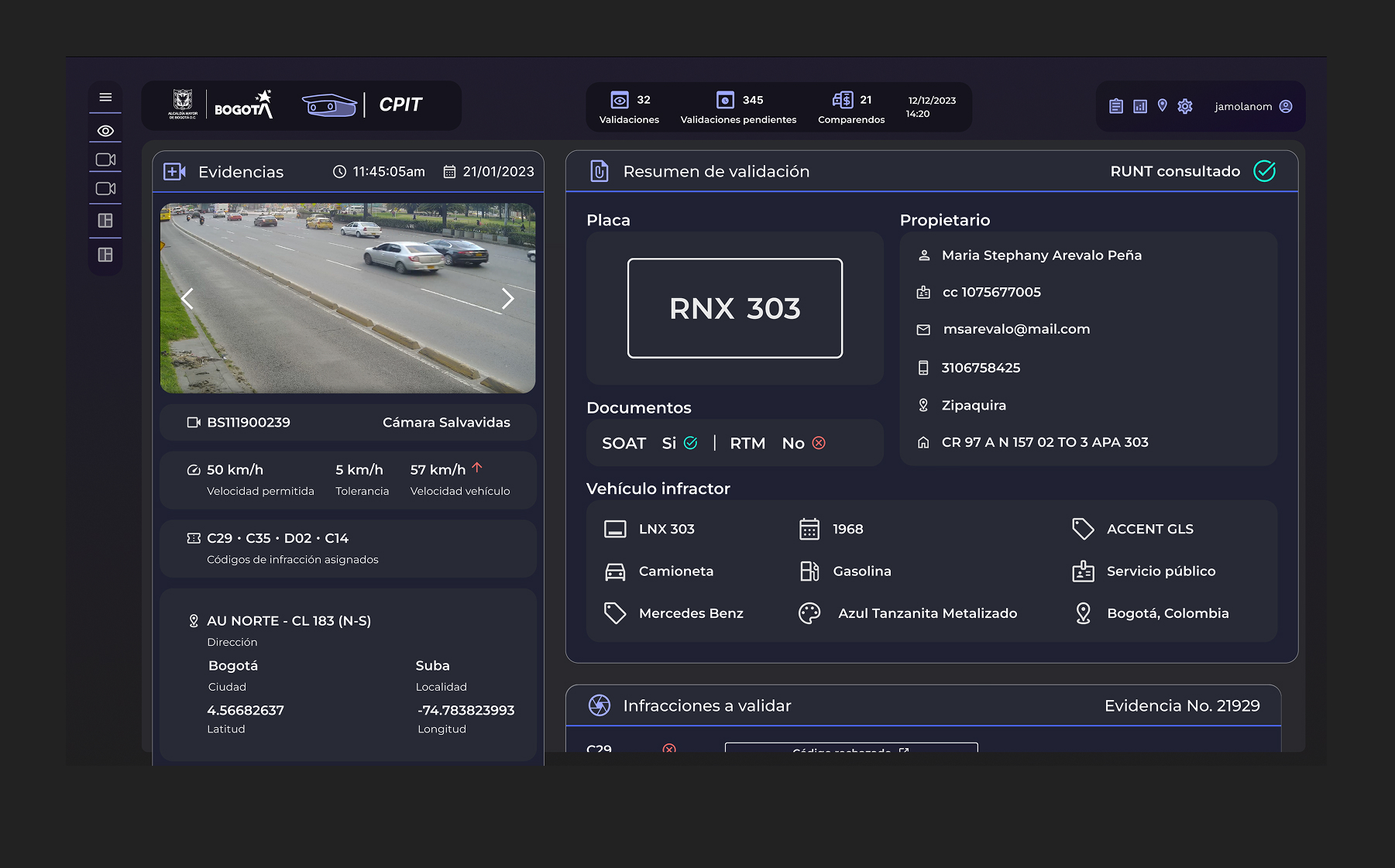
I started by observing agents working under real conditions. The main problem was clear: the evidence evaluation screen forced them to switch between multiple views to cross-reference vehicle data — SOAT, technical-mechanical inspection, and vehicle restrictions — while unnecessary information volume generated noise that slowed every decision and increased the risk of issuing erroneous violations. The redesign consolidated everything into a single scannable layout built around the evidence image, with a visual hierarchy that guides the agent's eye from the plate capture to the vehicle status indicators in under ten seconds.


Results
The complete redesign of CPIT transformed how Bogotá's enforcement agents process traffic violations. By restructuring the evidence evaluation workflow around the agent's decision-making process — consolidating vehicle status data, SOAT validity, technical-mechanical inspection, and pico y placa restrictions into a single, prioritized view — the new interface significantly reduced the time agents spend per evidence case, directly increasing the number of violations processed per shift. The redesigned platform also introduced a clearer configuration experience for vehicle restriction schedules and camera management, reducing setup errors and administrative overhead. User research with agents confirmed that the new layout reduced cognitive load and improved confidence in violation decisions, particularly in edge cases requiring cross-reference of multiple data sources.
Deliverables


